
Contents
This is a div block with a Webflow interaction that will be triggered when the heading is in the view.
Pay per click advertising (PPC) offers enormous potential for a business, but knowing how much to spend on PPC can be a daunting first hurdle. These first steps into the world of PPC offers exciting possibilities, expanding the reach of a business to the internet and drawing in a new audience. Being able to tailor the marketing to different demographics, sectors and regions yields a huge amount of power when it comes to targeted messages and strategies.
Before beginning with PPC, it’s important that decision makers understand some of the fundamentals. PPC is powerful and flexible, but there are businesses that it isn’t viable for, and recognising where they sit on the scale is an essential step to make.
The 90-Day Reality Check
Here's something many PPC guides won't tell you upfront: Google Ads doesn't work immediately. It needs time to learn.
Google and Microsoft have more data about user behaviour than we can possibly comprehend. They know how people search, click, engage, and spend money. They use all of that to put your ads in front of the right people. But here's the catch: whilst they have industry-wide data, they don't know anything about your business when you start.
Your campaigns need to gather their own performance data. Google's algorithm watches what happens when people click your ads, which keywords convert, what audiences respond, and adjusts accordingly. This doesn't happen overnight.
Best practice? Allow 90 days for your campaign to properly align. This breaks down into a learning phase and an optimisation phase. By the end of it, your campaign should be running like a well-oiled machine.
During this period, you need at least 10 clicks per day to gather enough data for efficient campaign operation. This threshold forms the basis of your minimum budget, which is one of the major considerations when deciding if PPC is viable for your organisation.
Working Out Your Minimum Budget
Below is an example equation to work out your minimum budget. All of these figures are hypothetical, but they’ll help explain what factors you need to consider. The most important figure is your Cost per Click (CPC). This is how much you're spending every time someone clicks your ad. It varies based on competition; expect it to increase during busy periods or in saturated markets.
Let's say:
- Average CPC: £1.10
- Minimum spend per day (10 clicks): £11
- 90 day initial optimisation: £990
- Monthly budget: £330
So in this example, you'd need to budget for £330 per month as an absolute minimum. If this is unaffordable, then PPC probably isn't viable yet. Simple as that.
Understanding Return on Investment
All right, so you can afford £330 a month. Great. But what are you actually getting back?
This is where margin comes in. If you're selling high-value items with significant margin (let's say £1,000 per unit with £400 margin), you can afford to spend considerably more per sale than if you're selling low-value, low-margin items.
The formula for your limit is straightforward: Margin × Acceptable Marketing Spend (%)
Acceptable Marketing Spend usually sits somewhere between 5-15%, depending on how your business operates. We'll assume 10% for this example.
So with these figures:
- £1,000 per unit
- £400 margin
- 10% Acceptable Marketing Spend
- £400 × 10% = £40
We now know that £40 is the absolute maximum this business can spend per sale through PPC. Whether that's achievable depends on the specifics of your industry and how effective your website and campaign are.
If everyone clicking your ads made a purchase, this would be easy. Unfortunately, consumer behaviour isn't quite that predictable.
Conversion Rate: The Make-or-Break Metric
The percentage of users who convert into something with financial value (a sale or a business lead) is your Conversion Rate. This metric is absolutely critical when working out whether PPC is right for you.
In our example, let's assume people clicking our ads are reasonably well-targeted and your landing page does a decent job of converting them. We'll set our Conversion Rate at 10%. (That's still optimistic, by the way. Many businesses see considerably lower rates, especially when starting out.)
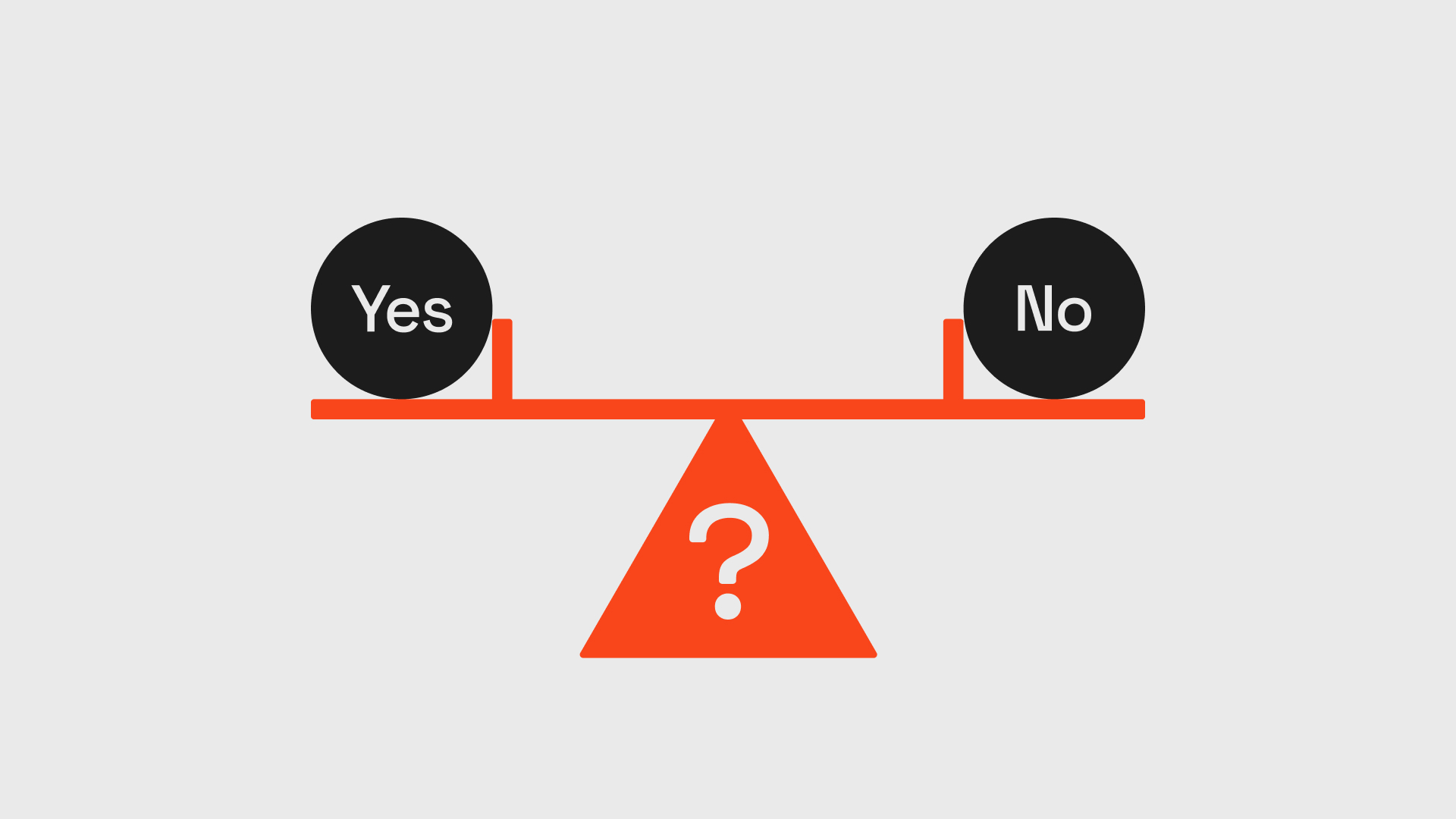
The Yes/No Decision Framework
So now we have all of the metrics we need to make a decision about whether or not we proceed with a PPC campaign. As a quick reminder, they are as follows:
- Minimum monthly budget: £330
- Cost per Click (CPC): £1.10
- Margin per Conversion: £400
- Threshold per Conversion: £40
- Conversion Rate: 10%
Using the CPC and Conversion Rate, we can work out the cost per conversion. Simply divide the CPC by the Conversion Rate.
£1.10 ÷ 10% = £11 per conversion
So it costs us £11 per conversion, and our threshold is £40. We're comfortably within budget with room to spare. In this scenario, the answer is still YES to PPC.
When the Numbers Don't Stack Up
Let's flip this around. Say your conversion rate is actually 2% (much more common for cold traffic or poorly optimised landing pages). Suddenly:
£1.10 ÷ 2% = £55 per conversion
Now you're spending £55 to make a sale where your threshold is £40. That's a losing proposition. Time to either improve your conversion rate through better landing pages and targeting, or explore other marketing channels.
The Reality of Running PPC Campaigns
Just because the numbers start out viable doesn't mean they'll stay that way. Consumer behaviour changes. Competitors adjust their bids. Economic factors shift. Seasonal variations kick in. All of these variables can significantly impact your metrics in either direction.
You'll need careful monitoring and management to ensure your campaign remains optimised and profitable. This isn't a "set it and forget it" situation.
When you scale a campaign up or down, expect a period of disruption whilst the algorithm adjusts to its new parameters. You can manage this to smooth the transition, but the same results won't directly translate from one budget to another.
PPC works brilliantly when:
- You can afford the 90-day runway (minimum £330/month in our example)
- Your cost per conversion sits comfortably below your threshold
- You have the capacity to monitor and optimise regularly
- Your website converts visitors effectively
PPC probably isn't viable when:
- You can't sustain the minimum budget for 90 days
- Your margins are too tight to absorb advertising costs
- Your conversion rates are too low to make the maths work
- You don't have time or expertise to manage campaigns properly
If you've made the calculations and PPC looks viable, brilliant. If the numbers don't stack up yet, focus on improving your conversion rate or exploring other marketing channels until they do.
Want help working out if PPC makes sense for your business? Find out more about how Main Ambition's PPC management services can help you grow your business.

Kieran is a Paid Media Executive at Main Ambition, and has spent the last decade working in digital marketing across a range of industries, growing revenue, lowering costs and improving return on ad spend for B2B and B2C alike. He watches cricket and writes books, both of which seem to make him grumpy, but he insists that they're good fun if you try hard enough.


.webp)